La poésie prend les parcs (French activity, multilingual support available)
A creative activity featuring a chalk poetry trail and workshop with Franco-Ténoise poet Amber O’Reilly. Open to everyone, with multilingual support.
Free

Learning an additional language is a demanding process. It requires time, consistency, and an environment that allows people to practice, try, and make mistakes without pressure.
In this context, different approaches can meet different needs. Whether through weekly classes or intensive immersion, each format offers distinct benefits depending on the goals and availability of learners.
At Collège Nordique, this distinction takes on particular meaning this summer, with an intensive training offer that is part of a broader reflection: how to make learning French accessible, effective, and grounded in Northern realities.
Research in the acquisition of additional languages shows that frequent and sustained exposure to a language plays a key role in developing skills, especially oral communication.
The Council of Ministers of Education, Canada highlights that immersive environments allow learners to use their knowledge more spontaneously and more consistently. This continuity supports not only retention, but also the development of linguistic reflexes that are essential for achieving real fluency.
Immersion works differently. It creates a context where the language is constantly present, allowing learners to move more quickly from understanding to active use and to develop lasting language habits.
At Collège Nordique, several members of the teaching team have themselves learned languages through immersion, whether in French or in other languages. These experiences directly shape how they support learners.
The journey of Rosie Benning is a particularly strong example.
Now Director of Teaching at Collège Nordique, she never imagined that her professional and personal path would lead her to Northern Canada. Yet it was precisely learning French that opened that trajectory.
Having developed a strong interest in languages from a young age, she chose to pursue a French immersion pathway. This decision led her to study in French, travel, and work in various Francophone environments before settling in the Northwest Territories.
As she reflects on her experience:
"I likely wouldn’t have the path I have today without French immersion. It opened doors for me, both professionally and personally, and allowed me to make choices I wouldn’t have considered otherwise."
For more than a decade, she has played a key role at Collège Nordique, helping shape and develop its educational offerings.
Other members of the team have also experienced immersion in different linguistic and cultural contexts, which enriches the pedagogical approaches offered.
This understanding of the learning process is reflected in the team’s teaching approach.
The journey of Leanne, a teacher in the LINC program, illustrates this well.
Originally from Ontario and from a non-French-speaking background, she made the decision to enroll in French immersion at a pivotal moment in her schooling. Neither her parents nor her immediate environment spoke French, making this choice particularly meaningful.
She later continued her learning internationally, including in French-speaking Switzerland, before working in French in Quebec. These experiences allowed her to gradually build confidence through real-life situations where she actively used the language.
Today, she supports learners with a strong understanding of what it means to learn a language:
"Learning a language requires commitment. When you’re not surrounded by it at the beginning, every opportunity to practice matters. Intensive periods help create that continuity and allow you to progress more quickly."
She also highlights the importance of the learning environment:
"Being in an immersive, structured, and supportive environment allows you to try, make mistakes, and try again. That’s often where confidence really develops."
In the Northwest Territories, opportunities for intensive French learning remain limited, despite strong interest within the community.
The recent closure of certain immersion initiatives in the North, including in Inuvik, highlights how fragile and difficult these types of programs can be to sustain. It reinforces the importance of developing solutions that are adapted and sustainable for learners.
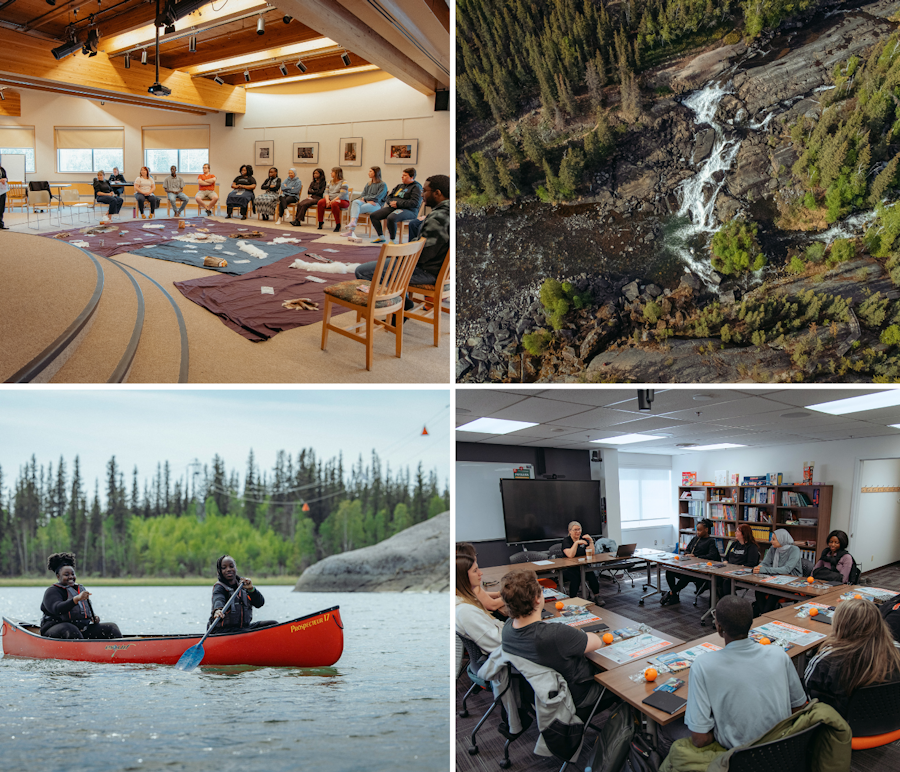
In this context, Collège Nordique will welcome, for the first time, a cohort of the Explore program, bringing together 20 adult participants for a French immersion experience.
At the same time, five additional spots have been opened for members of the community who wish to access a similar intensive training opportunity.
As Patrick Arsenault, Executive Director of Collège Nordique, explains:
"We know that interest in French is strong in the North, but opportunities for immersive learning remain limited. Offering this type of training at an accessible cost helps address a real need in the community."
At Collège Nordique, a standard French course typically represents about 20 hours of instruction spread over several weeks.
This summer’s offer provides access to up to 75 hours of training over five weeks, for a cost equivalent to a regular course. This exceptional format is being offered as part of a launch phase and may evolve in the coming years.
It therefore represents a concrete opportunity for learners who want to make significant progress.
This format stands out for several key elements:
By reducing gaps between learning sessions, this approach helps integrate knowledge more effectively and supports faster development of oral fluency.
At Collège Nordique, learning French goes beyond the classroom.
In a Northern context, where linguistic and cultural realities are diverse, learning a language also means learning how to interact within a territory, understand its dynamics, and find one’s place within it.
Immersion helps create stronger connections between language and lived experience, encouraging meaningful and practical use of French.
For those who want to learn French or strengthen their skills, this intensive program represents a structured opportunity.
It allows learners not only to progress more quickly, but also to experience the language in a supportive, coherent, and Northern context.
Published on May 8th 2026